Laser Diode Module
Complete Laser Assembly for Precision Applications
A laser diode module is a compact, readytouse package containing a laser diode integrated with essential optics, drive electronics, and sometimes cooling elements[citation:1][citation:2]. It simplifies the use of bare laser diodes, which are delicate and require precise control, by providing a complete, plugandplay solution with specific output characteristics[citation:2][citation:4][citation:12].
Integrated & UserFriendly Combines laser diode, optics, and driver into one easytouse module
Wide Range of Applications - Used in alignment, sensors, barcode scanning, and medical devices[citation:2][citation:6]
A laser diode module is designed to generate a coherent light beam for a specific purpose[citation:4]. Its performance is defined by key specifications including output power (mW), wavelength (nm), and beam shape[citation:3][citation:7].
Choose a module with integrated optics for a collimated beam or with fiber coupling for flexible light delivery[citation:2][citation:9].
Key Features
Beam Shaping Builtin optics create a collimated, circular, or line beam, eliminating the need for external focusing[citation:1][citation:2][citation:3]
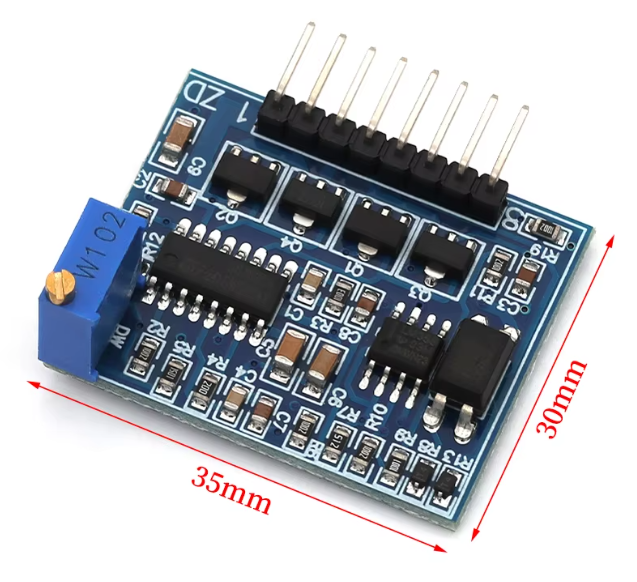
Integrated Drive Electronics - Includes protection against ESD and reverse polarity, and often features Auto Power Control (APC) for stable output[citation:2][citation:10][citation:12]
Compact & Robust Housing - Provides a durable, shielded package that can be easily mounted, ideal for integration into instruments[citation:4][citation:8][citation:12]
Power and Wavelength Stabilization - Internal feedback and temperature control (TEC) ensure stable output power and wavelength[citation:2][citation:4]
= Applications =
- Machine Vision and Industrial Alignment[citation:7][citation:12]
- Barcode Scanners and Optical Data Storage[citation:2][citation:6]
- Medical Devices (e.g., therapy, ophthalmology)[citation:2][citation:5]
- Pumping Solid-State Lasers and Fiber Optic Communications[citation:2][citation:9]
- Scientific Research (Spectroscopy, Interferometry)[citation:7][citation:9]
Versatile Solution - One module can replace multiple discrete components, saving development time
Easy Integration - Simplified electrical and optical interface, with options like USB or TTL control[citation:8][citation:10][citation:11]
√ Available in standard wavelengths (e.g., 405nm, 520nm, 635nm, 850nm)[citation:3][citation:6][citation:8]
√ Options for continuous-wave (CW) or pulsed operation[citation:8]
√ Often available with circular, elliptical, or line beam outputs[citation:3][citation:7]
Troubleshooting
No laser output:
- Check the power supply and connections; some modules require specific voltages (e.g., 3-5V)[citation:7][citation:10].
- Verify the enable signal (like TTL input) is correctly applied, especially for modulated modules[citation:8].
- Check if the module is within its operating temperature range[citation:8][citation:10].
Unstable output power:
- Ensure stable input voltage and current from a suitable power supply; incompatible drivers can cause issues[citation:6][citation:7].
- For temperature-sensitive modules, check if active cooling (e.g., a fan) is required to maintain stable operation[citation:7].