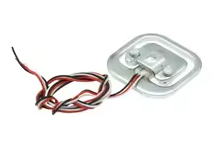
Flex Sensor 2.2 Inch (Bend Sensor)
Resistance-Based Bending Detection for Arduino and Robotics Projects
The flex sensor is a variable resistor that changes its resistance when bent. As the sensor is flexed, the resistance across its terminals increases, making it ideal for measuring physical bending in applications like data gloves, robotics, and medical devices [citation:1][citation:4].
Simple Variable Resistor - Resistance increases with bending angle
2.2 Inch Length - Standard size for finger and joint detection
Flat resistance is typically 10kΩ to 30kΩ increasing to 60kΩ to 125kΩ when bent to 90° [citation:5][citation:9].
Bending life exceeds 1 million cycles [citation:10].
The sensor has no polarity, making wiring straightforward [citation:9].
Do not bend the base or connector area as this can cause permanent damage [citation:3][citation:7].
Technical Specifications (Typical)
| Parameter | Value |
|---|
| :- | :- |
| Flat Resistance | 10kΩ - 30kΩ |
| Bend Resistance (90°) | 60kΩ - 125kΩ |
| Length | 2.2 inches (56mm) [citation:2] |
| Life Cycle | >1 million bends |
| Power Rating | 0.5W continuous |
| Operating Temp | -35°C to +80°C |
| Thickness | 0.43mm |
= Key Features =
+Widely Used - Originally featured in the Nintendo Power Glove [citation:2][citation:4]
+No Polarity - Connect either pin to VCC or GND [citation:9]
+Breadboard Friendly - 0.1 inch spaced terminals [citation:2]
+Resistance Increases with Bend - Intuitive output for microcontrollers [citation:1]
= Applications =
- Finger movement detection for data gloves
- Robotics and animatronics (joint angle sensing)
- Medical devices and physical therapy monitors
- Virtual reality and gaming controllers
- Door and hinge position monitoring [citation:4]
Versatile and Reliable - Proven sensor with over a million bend cycles
Easy to Interface - Simple voltage divider with Arduino
√ Compatible with Arduino, ESP32, Raspberry Pi
√ Works with analog input pins
Wiring Guide (with Arduino)
The sensor is used as part of a voltage divider circuit to convert resistance change into a measurable voltage [citation:4][citation:9]:
- Connect one terminal to 5V.
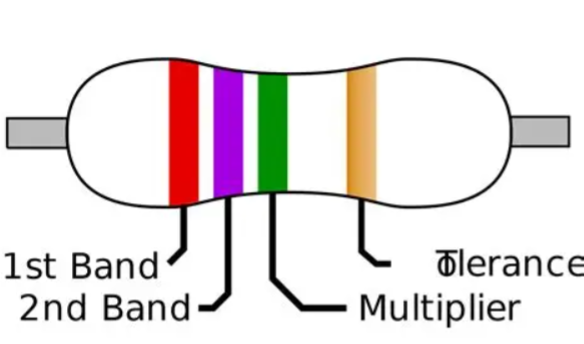
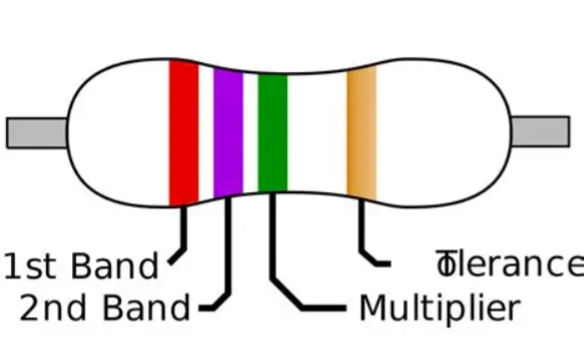
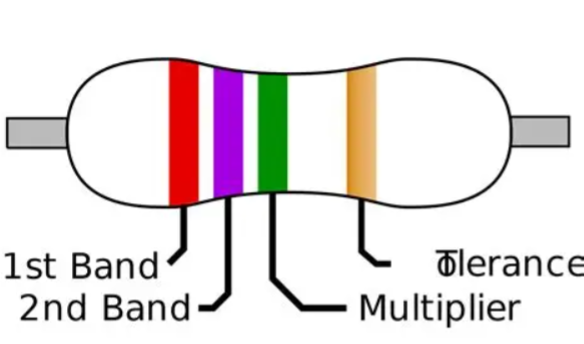
- Connect the other terminal to A0 and a 10kΩ resistor to GND.
- Read the analog value and map it to bend angle.
Add a 10kΩ fixed resistor between A0 and GND to create a voltage divider [citation:9].
Use a 15kΩ resistor if you need higher sensitivity for small bends [citation:9].
Troubleshooting
No change in reading:
- Check voltage divider wiring.
- Ensure you are bending the sensing area, not the base.
- Verify the sensor is not damaged from over-bending.
Unstable or noisy readings:
- Use a stable 5V power supply.
- Check connections are secure on the breadboard.