Sound Microphone Sensor Module
High-Sensitivity Acoustic Detection Module for Arduino and Microcontrollers
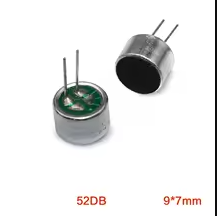
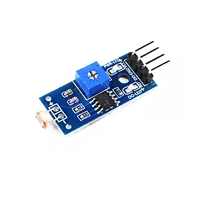
This sound sensor module is a versatile acoustic detection device that can identify sound presence and measure ambient noise levels. It is equipped with an electret microphone and an LM358 or LM393 comparator IC for signal conditioning and threshold detection.
Dual Output Options - Provides both analog (AO) and digital (DO) outputs for flexible integration.
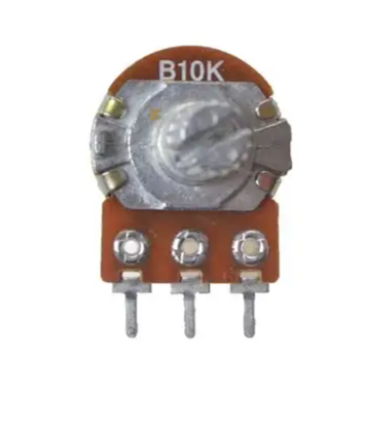
Adjustable Sensitivity - Onboard potentiometer allows precise tuning of the digital trigger threshold.
Operating voltage is typically 3.3V to 5V DC, making it compatible with most microcontroller boards.
For sound level detection, connect the analog output to an ADC pin; for simple presence detection (clap sensor), use the digital output.
Technical Specifications (Typical)
| Parameter | Value |
|---|
| Supply Voltage | 3.3V to 5V DC |
| Frequency Response | 50Hz to 20kHz |
| Outputs | Analog (AO) + Digital (DO) |
| Sensitivity | 48 to 66 dB (adjustable) |
| Comparator IC | LM358 or LM393 |
| Dimensions | ~44x15x10mm |
= Key Features =
+LM358 / LM393 Comparator - Provides clean, stable digital output signal with status LED indicator
+Adjustable Sensitivity Onboard potentiometer finetunes the digital output trigger threshold
+Wide Voltage Range - Operates from 3.3V to 5V for flexible power options
+LED Indicators - Power LED and comparator output LED for status monitoring
+Mounting Hole - 3mm screw hole for secure installation
= Applications =
- Clap detection and voice-activated switches
- Audio level monitoring and sound visualization projects
- Acoustic trigger for camera or recording equipment
- STEM education and electronics learning projects
- Noise level detection for environmental monitoring
Versatile Acoustic Sensor - Simple interface for both analog and digital applications.
Reliable Detection - High sensitivity and adjustable threshold for precise triggering.
√ Compatible with Arduino, ESP32, Raspberry Pi, and other microcontrollers
√ Simple 3-pin interface (VCC, GND, AO, DO)
√ Widely used in hobbyist and educational projects
Connection Guide (Arduino)
| Sensor Pin | Arduino Pin | Function |
|---|
| VCC | 5V | Power supply |
| GND | GND | Ground |
| AO | A0 (Analog) | Analog reading (sound intensity) |
| DO | D2 (Digital) | Digital output (threshold trigger) |
> Connect AO to an analog pin for reading sound intensity or DO to a digital pin for simple presence detection.
Adjust the potentiometer while monitoring the digital output to set the desired trigger threshold.
The digital output is active HIGH - it outputs a logic HIGH when the sound exceeds the set threshold.
This sensor detects sound presence and intensity; it cannot identify specific frequencies or recognize speech.
Troubleshooting
Sensor not detecting sound:
- Adjust the sensitivity potentiometer on the module
- Check that the microphone is facing the sound source
- Verify VCC and GND connections
No digital output signal:
- Ensure the potentiometer is properly adjusted
- Check wiring to DO pin
- Verify supply voltage is within 3.3V to 5V range
Unstable analog readings:
- Use stable 5V power supply
- Check for loose connections on AO pin
- Add a capacitor to filter power noise