18650 Lithium-Ion Rechargeable Battery
High-Density Cylindrical Power Cell for Electronics and DIY Projects
The 18650 is a rechargeable lithium-ion battery, widely used in flashlights, power banks, laptops, and electric vehicles. Its name comes from its size: 18mm in diameter and 65mm in length [citation:1][citation:5]. It offers a good balance of high energy density, long cycle life, and high discharge current [citation:1][citation:9].
High Energy Density and Long Cycle Life - Offers reliable power for demanding applications with a lifespan of up to 500 charge cycles [citation:5].
Versatile Power Source - Used in consumer electronics, power tools, and renewable energy storage systems [citation:1].
The nominal voltage is typically 3.6V or 3.7V, with a fully charged voltage of 4.2V [citation:1][citation:5]. The capacity commonly ranges from 1800mAh to 3500mAh [citation:1][citation:9].
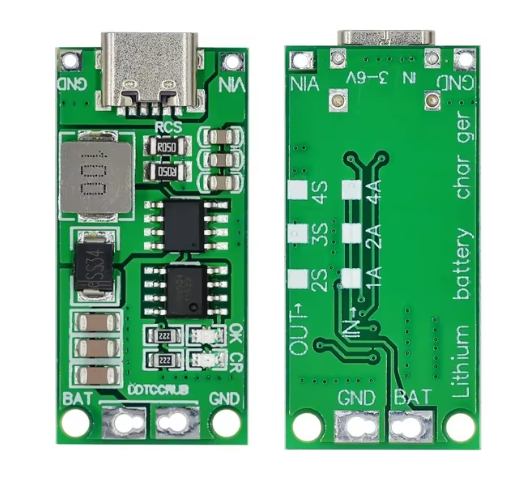
Always charge with a dedicated lithium-ion charger. The recommended charging current is 1A (0.5C), and the maximum charge voltage is 4.2V [citation:9].
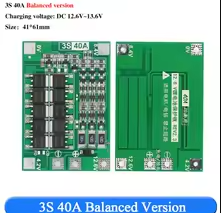
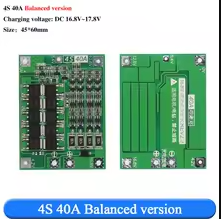
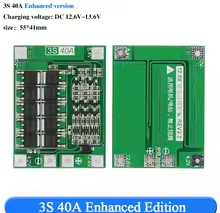
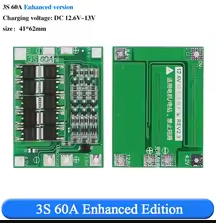
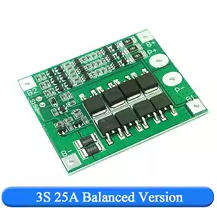
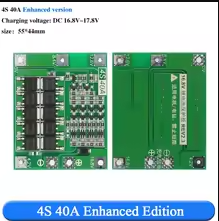
Use a TP4056 charging module or a dedicated 18650 charger with integrated protection circuits for safe and reliable operation [citation:9].
*Important:* 18650 batteries are powerful and can be dangerous if mishandled. Never shortcircuit, overcharge, overdischarge, or expose them to high temperatures [citation:9][citation:13].
Technical Specifications
| Parameter | Value |
|---|
| :- | :- |
| *Nominal Voltage* | 3.6V – 3.7V [citation:1][citation:15] |
| *Fully Charged Voltage* | 4.2V [citation:1][citation:9] |
| *Cut-off / Discharge Voltage* | 2.5V to 3.0V [citation:1][citation:9] |
| *Nominal Capacity* | 1800mAh – 3500mAh [citation:1][citation:4] |
| *Diameter* | ~18mm [citation:1][citation:5] |
| *Length* | 65mm (Protected cells are 69mm long) [citation:1][citation:3] |
| *Weight* | ~45g to 48g [citation:2][citation:4] |
| *Cycle Life* | 300 – 500 cycles [citation:1][citation:5] |
## Key Features and Chemistry
*Protected vs. Unprotected Cells [citation:9][citation:11]:*
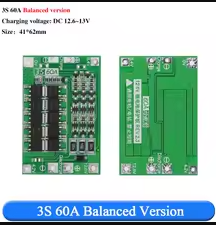
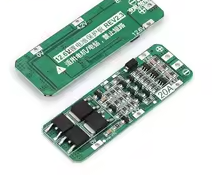
- *Protected Cells:* These have a builtin electronic circuit (PCB) that protects against overcharging, overdischarging, short circuits, and overheating. They are recommended for general safety and are typically slightly longer [citation:3][citation:9][citation:11].
- *Unprotected Cells:* These lack a protection circuit. They are cheaper but are more dangerous and should only be used in devices with external protection [citation:9][citation:13].
*Common Chemistries [citation:1]:*
- *NMC / NCA:* High energy density and good thermal stability, commonly used in high-performance applications [citation:1][citation:4][citation:8].
- *LFP (LiFePO4):* Known for longer life cycles and excellent safety, but with a lower voltage (3.2V) and energy density [citation:1][citation:4].
# Applications
- High-performance flashlights and portable electronics [citation:1][citation:5].
- Laptops, power banks, and portable speakers [citation:1][citation:5].
- Cordless power tools and electric vehicles [citation:1][citation:4].
- Renewable energy storage systems (e.g., solar power banks) [citation:1][citation:9].
Power and Versatility - A standard component for DIY and professional applications.
Proven Technology - A robust choice for both hobbyists and engineers.
√ Easily available in various capacities and chemistries.
√ Widely supported by charging modules like the TP4056.
√ Standard cylindrical form factor for many device holders.
## Troubleshooting
Battery not charging:
- Verify you are using a dedicated lithium-ion charger (e.g., TP4056) and that the connection polarity is correct.
- Check if the battery is a protected cell that has been triggered into a deep discharge protection state; some chargers can "wake" these up.
- Ensure the battery's voltage is above its cut-off threshold (usually 2.5V) [citation:9][citation:13].
Rapid discharge or overheating:
- Ensure your load current is within the battery's maximum continuous discharge current rating (e.g., 10A-20A for standard cells) [citation:13].
- If the battery is a protected cell, the builtin PCB may be shutting it down due to overcurrent or overtemperature.